
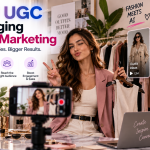

Fashion marketing has always been driven by visuals, creativity, trends, and storytelling. From magazine campaigns and runway shows to influencer collaborations and social media advertisements, fashion brands constantly look for new ways to capture attention and connect with consumers.
Today, the fashion industry is experiencing another major shift as artificial intelligence becomes part of the content creation process. One of the most interesting developments is the rise of AI UGC for fashion marketing.
AI-generated user-generated content combines the familiar, conversational style of user-generated content with AI-powered video and image creation. Fashion brands can use AI avatars, digital creators, AI-generated scripts, voiceovers, product visuals, and automated editing to create content designed for modern social platforms.
Instead of depending entirely on expensive pBlockedword/sentenceoshoots or influencer campaigns, brands can create multiple creative concepts around the same fashion product. This can help marketers produce more content, test different ideas, personalize campaigns, and respond quickly to changing trends.
From clothing and footwear to accessories, jewelry, and luxury fashion, AI UGC is changing how fashion brands approach digital advertising.
What Is AI UGC for Fashion Marketing?
AI UGC for fashion marketing refers to user-generated-content-style videos, images, and advertisements created or enhanced using artificial intelligence to promote fashion products and brands.
Traditional UGC typically comes from real customers or creators who showcase products, share opinions, demonstrate styling ideas, or explain how they use a product.
AI UGC uses artificial intelligence to create similar content formats. A fashion brand can generate a digital presenter, create a conversational script, add an AI-generated voice, showcase a product, and produce a short-form video for platforms such as Instagram, TikTok, or YouTube.
For example, a clothing brand could create a video around the idea:
"Here are three easy ways to style this oversized jacket for fall."
An AI-generated presenter can introduce the concept while the video showcases the product in different outfits or environments.
The objective isn't necessarily to replace authentic customer content. Instead, AI UGC gives brands another way to create social-first content at scale.
Brands should also be transparent when AI-generated presenters or fictional experiences are used rather than presenting them as real customers.
Why Fashion Brands Are Adopting AI UGC
Fashion is one of the most competitive categories on social media. Consumers see thousands of fashion images and videos every day, making it increasingly difficult for brands to capture attention.
At the same time, fashion trends move quickly.
A product that is trending today may receive much less attention several weeks later. Brands therefore need creative workflows that allow them to respond quickly.
Traditional fashion production can involve pBlockedword/sentenceographers, models, stylists, makeup artists, locations, creative directors, editors, and production teams. These processes remain valuable for major campaigns, but they aren't always practical for every social media post or advertising concept.
AI UGC provides an additional option.
Fashion marketers can use AI to create different versions of product videos, styling concepts, seasonal campaigns, and social advertisements without producing a completely new pBlockedword/sentenceoshoot for every idea.
How AI UGC Is Changing Fashion Marketing
1. AI UGC Makes Fashion Content More Social-First
Fashion advertising has traditionally focused on polished editorial imagery and high-production campaigns.
While these formats remain important, social media often rewards content that feels more natural and immediate.
Consumers are accustomed to watching creators talk directly to the camera, demonstrate products, share styling tips, and provide recommendations.
AI UGC allows fashion brands to adopt this style.
For example, instead of creating a traditional advertisement for a handbag, a brand could create a short video titled:
"Three ways to style this handbag for everyday outfits."
The video can introduce the product through a creator-style format while keeping the brand's visual identity consistent.
This makes the advertisement feel more appropriate for social feeds.
2. Fashion Brands Can Create More Content From One Product
One fashion product can support dozens of content ideas.
Consider a single pair of sneakers.
A brand could create videos about:
- Three ways to style the sneakers
- Casual outfit ideas
- Travel outfits
- Weekend styling
- Streetwear looks
- Color combinations
- Product features
- Outfit inspiration
- Seasonal styling
- Fashion trends
Instead of creating one advertisement, marketers can build a complete content series around the same product.
This is particularly useful for ecommerce brands that need a continuous supply of creative assets for paid advertising and organic social media.
3. AI UGC Supports Faster Creative Testing
Advertising performance depends heavily on creative.
The same fashion product may perform differently depending on the hook, presenter, background, script, product angle, and call to action.
AI UGC can make it easier to test multiple versions.
For example, a fashion brand could create three advertisements for the same dress.
Version 1:
"Looking for an easy outfit for your next dinner?"
Version 2:
"Three ways to style this dress."
Version 3:
"One dress, three completely different looks."
The product remains the same, but the storytelling changes.
Marketers can then analyze campaign performance and identify which creative concepts deserve further testing.
4. AI Avatars Can Act as Digital Fashion Creators
AI avatars are becoming another tool for fashion content creation.
A digital presenter can introduce a product, explain styling ideas, demonstrate different looks, or discuss product features.
For example, an AI avatar could say:
"If you're building a minimalist wardrobe, here are five pieces that can work across multiple outfits."
The video could then showcase relevant products from the brand.
Fashion companies can also experiment with different presenters for different auBlockedword/sentencences.
A younger, casual-looking digital creator may fit a streetwear campaign, while a polished presenter may be more appropriate for a premium fashion brand.
The important factor is ensuring that the avatar supports the brand's identity rather than distracting from it.
5. AI UGC Can Personalize Fashion Advertising
Fashion preferences are highly individual.
Some consumers prefer minimalism, while others prefer streetwear, luxury, vintage, athletic, casual, or experimental styles.
AI makes it easier to develop different creative concepts around these preferences.
For example, the same jacket could be marketed through different videos:
Minimalist auBlockedword/sentencence:
Focus on neutral colors and versatile styling.
Streetwear auBlockedword/sentencence:
Focus on sneakers, oversized silhouettes, and casual combinations.
Luxury auBlockedword/sentencence:
Focus on materials, craftsmanship, and premium styling.
Travel auBlockedword/sentencence:
Focus on versatility and layering.
This type of auBlockedword/sentencence-specific storytelling can make fashion advertising more relevant.
6. AI UGC Helps Fashion Brands Respond to Trends
Fashion trends can change quickly.
A particular color, silhouette, aesthetic, or styling approach may suddenly become popular on social media.
Brands that can respond quickly have more opportunities to participate in relevant conversations.
AI-powered content creation can reduce some of the production time involved in creating trend-based content.
For example, if a particular fashion aesthetic becomes popular, a brand could quickly create styling videos showing how its products fit into that aesthetic.
However, trend participation should still be guided by human creative judgment.
Not every trend will be appropriate for every fashion brand.
7. AI UGC Can Improve Product Storytelling
Fashion products often have stories behind them.
A designer may have drawn inspiration from a particular culture, decade, material, location, or artistic movement.
AI UGC can help brands communicate these stories through short-form content.
A fashion brand could create a video explaining:
"The inspiration behind our latest collection."
Another video could explain the design process or demonstrate how a particular material is used.
This turns a product into a story rather than simply showing a product image.
8. Fashion Brands Can Create Virtual Styling Content
One of the biggest opportunities for AI in fashion marketing is styling visualization.
Consumers often want inspiration before purchasing an item.
AI UGC can help brands create videos showing different outfit combinations.
For example:
"Five ways to style a white shirt."
"Three outfits for one pair of trousers."
"How to style a blazer for work and weekends."
"What to wear with white sneakers."
This type of content can provide value while naturally featuring the brand's products.
9. AI UGC Can Support Fashion Influencer Campaigns
AI UGC does not have to replace real influencers.
Instead, brands can use both approaches together.
A campaign might include:
Real influencers: Authentic experiences and opinions.
AI UGC: Scalable product explainers and advertisements.
Professional campaigns: High-production brand storytelling.
Customer UGC: Genuine social proof.
Each format can serve a different marketing purpose.
For example, an influencer could create an authentic outfit video, while the fashion brand could turn the same product into multiple AI UGC advertisements for paid social campaigns.
This gives marketing teams more creative flexibility.
AI UGC for Different Fashion Categories
Clothing Brands
Clothing companies can use AI UGC for styling tutorials, seasonal campaigns, outfit inspiration, product demonstrations, and collection launches.
Footwear Brands
Shoe brands can create videos around outfit combinations, product features, use cases, and lifestyle scenarios.
Jewelry Brands
Jewelry companies can use AI UGC to showcase styling ideas, gifting concepts, product details, and occasion-based campaigns.
Luxury Fashion Brands
Luxury brands can use AI UGC carefully for storytelling, product education, social advertising, and digital experiences while maintaining their premium aesthetic.
Sportswear Brands
Sportswear companies can create videos around active lifestyles, product features, workout clothing, and everyday styling.
How to Create AI UGC for Fashion Marketing
Creating effective AI UGC requires more than selecting an AI avatar.
Step 1: Choose the Product
Start with one specific fashion product.
It could be a dress, handbag, sneaker, jacket, watch, or accessory.
Step 2: Define the AuBlockedword/sentencence
Understand who is most likely to purchase the product.
Consider age group, fashion preferences, lifestyle, use case, and platform behavior.
Step 3: Choose a Content Angle
Decide whether the video will focus on:
- Styling
- Product features
- Trends
- Education
- Lifestyle
- Product discovery
- Seasonal fashion
- Gift ideas
Step 4: Write a Conversational Hook
The first few seconds should immediately communicate why the video is relevant.
For example:
"Need an outfit that works from the office to dinner?"
Step 5: Create the Script
Keep the script short, natural, and focused on one central idea.
Step 6: Choose an AI Presenter
Select an AI avatar or digital creator that fits the target auBlockedword/sentencence and brand identity.
Step 7: Add Product Visuals
Use accurate product images, videos, or approved brand assets.
For fashion products, check that colors, patterns, logos, materials, and proportions are represented accurately.
Step 8: Add Captions
Short-form videos should be understandable even without sound.
Use concise captions and text overlays to highlight important points.
Step 9: Add a Call to Action
Finish with a clear action such as:
"Shop the collection."
"Explore the new arrivals."
"Discover more styles."
Step 10: Test Multiple Versions
Create different hooks, scripts, presenters, and formats to identify which concepts perform best.
Best Practices for AI UGC in Fashion Marketing
Keep the Product Accurate
AI-generated visuals can sometimes modify product details.
Fashion brands should carefully review content before publishing it.
Check colors, patterns, logos, fabrics, silhouettes, and other important details.
Maintain Brand Consistency
AI content should still look and feel like the brand.
Use consistent typography, messaging, visual style, and tone.
Avoid Generic Content
One risk of AI-generated content is producing videos that look similar to everyone else's.
Add specific product information and creative concepts to make the content distinctive.
Don't Fake Customer Experiences
If the presenter is AI-generated, don't present them as a real customer.
Use transparent messaging and distinguish AI-generated content from genuine customer testimonials.
Focus on Storytelling
AI can produce a video quickly, but speed alone doesn't make content effective.
A strong fashion video should communicate an idea, solve a problem, inspire the auBlockedword/sentencence, or tell a story.
AI UGC for Fashion Ecommerce
Ecommerce fashion brands can particularly benefit from AI UGC because product discovery and social advertising are closely connected.
A customer may discover a product through an Instagram Reel, visit the brand's website, browse the product page, and eventually make a purchase.
AI UGC can support different stages of this journey.
For awareness, brands can create trend-based or lifestyle videos.
For consideration, they can create product demonstrations and styling content.
For retargeting, they can create videos addressing common questions or highlighting product details.
This creates a more complete content strategy around each product.
How Tagshop AI Can Help Fashion Brands
AI video platforms such as Tagshop AI can help fashion marketers streamline the process of creating UGC-style video content.
Brands can use AI-powered workflows to create scripts, generate AI avatar videos, produce voiceovers, and develop multiple creative variations for social media and advertising.
For example, a fashion ecommerce brand could take one product and create different videos for styling, product discovery, seasonal campaigns, and paid advertisements.
The value comes from creating a repeatable creative workflow rather than relying on a single advertisement.
Fashion marketers can experiment with different concepts while maintaining a consistent brand identity.
Common Mistakes to Avoid
Fashion brands should avoid creating AI UGC without a clear purpose.
A video may look impressive but still fail if the auBlockedword/sentencence doesn't understand what the product is or why it matters.
Another mistake is using overly generic scripts.
Fashion content should feel specific to the product and auBlockedword/sentencence.
Brands should also avoid relying entirely on AI-generated models or presenters.
Real customers, professional pBlockedword/sentenceographers, influencers, and creators can still provide important forms of authenticity.
Finally, brands should review AI-generated visuals carefully to make sure products are accurately represented.
The Future of AI UGC for Fashion Marketing
The future of AI UGC for fashion marketing is likely to become increasingly personalized, visual, and automated.
AI technology may allow brands to create different advertisements based on individual style preferences, demographics, shopping behavior, and product interests.
A shopper interested in minimalist fashion could receive one version of an advertisement, while a streetwear enthusiast could see another.
AI could also help brands create localized campaigns for different countries and languages.
Virtual fashion creators and digital models may become additional creative tools for fashion brands, while real creators and customers will continue providing authentic human experiences.
The most effective strategy is unlikely to be completely AI-generated marketing.
Instead, fashion brands can combine AI with human creativity, professional pBlockedword/sentenceography, influencer marketing, customer UGC, and strong brand storytelling.
Conclusion
AI UGC for fashion marketing is changing the way brands approach content creation, social media advertising, product storytelling, and creative testing.
From styling videos and virtual creators to trend-based content and personalized advertisements, AI gives fashion marketers more flexibility to create and test content at scale.
The biggest opportunity is not simply creating more videos. It is creating more relevant content for different auBlockedword/sentencences, products, platforms, and stages of the customer journey.
Fashion brands that combine AI-powered production with accurate product presentation, authentic storytelling, strong creative direction, and human oversight can build a more flexible marketing workflow.
As fashion continues to become increasingly connected to social media and digital commerce, AI UGC is becoming an important tool for brands looking to create engaging, scalable, and social-first marketing content.
Frequently Asked Questions
What is AI UGC for fashion marketing?
AI UGC for fashion marketing is user-generated-content-style marketing created using artificial intelligence. It can include AI avatars, digital creators, synthetic voices, automated scripts, product visuals, and short-form videos.
How can fashion brands use AI UGC?
Fashion brands can use AI UGC for styling videos, product demonstrations, social media advertisements, collection launches, trend-based campaigns, product education, and ecommerce marketing.
Can AI UGC replace fashion influencers?
AI UGC can complement influencer marketing but does not need to replace real creators. Brands can use AI-generated content alongside influencers, professional campaigns, and authentic customer UGC.
Is AI UGC suitable for luxury fashion brands?
Yes, but luxury brands should maintain strict creative and quality standards. AI-generated content should match the brand's visual identity and should not compromise product accuracy or premium positioning.
Can AI UGC help fashion brands create more social media content?
Yes. AI can help brands develop multiple creative variations around a product, including styling videos, product explainers, trend-based content, and short-form advertisements.
What makes AI UGC effective for fashion advertising?
Effective AI UGC should have a strong hook, relevant storytelling, accurate product visuals, natural language, clear branding, engaging presentation, and a strong call to action.
How can fashion brands personalize AI UGC?
Brands can create different versions of content based on auBlockedword/sentencence interests, fashion styles, product categories, locations, languages, and customer journey stages.
Should brands disclose AI-generated content?
Brands should follow applicable advertising and platform requirements and avoid misleading viewers about whether a presenter, testimonial, or experience is real. Transparency is particularly important when AI-generated people or voices are used.