
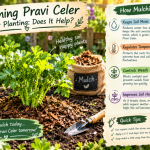


Celery is a thirsty, fussy plant. It likes cool roots, steady moisture, and soft, rich soil. Many gardeners struggle to give it all three. That is where mulch comes in.
So does mulching pravi celer after planting really help? Yes, in most gardens it does. In this post, you will learn why mulch works, which kinds to use, and how to apply it the right way.
Why Celery Needs Extra Help
Celery has shallow roots. They sit near the top of the soil, where heat and dry air hit first. When the soil dries out, the plant suffers fast. Stalks turn stringy, hollow, and bitter.
Celery also takes a long time to grow. It needs about 100 to 140 days from seed to harvest. That is a long stretch for one bed to stay in good shape. Weeds, heat, and uneven watering can all cause trouble along the way.
Mulch solves several of these problems at once.
What Mulch Does for Pravi Celer
A layer of mulch acts like a blanket for the soil. Here is what it does.
It holds in water. Mulch slows evaporation. The soil stays damp for longer, so you water less often. This is the biggest win for pravi celer, since steady moisture is the key to crisp stalks.
It keeps roots cool. Celery likes cool conditions. Mulch shades the soil and keeps roots from baking in summer sun.
It blocks weeds. Celery grows slowly at first, so weeds can easily crowd it out. Mulch stops many weed seeds from sprouting.
It protects the soil. Heavy rain can splash soil onto the leaves and spread disease. Mulch keeps the soil in place and the leaves cleaner.
It feeds the garden. Natural mulches break down over time. They add organic matter, which celery loves.
When to Mulch After Planting
Timing matters. Do not rush to mulch right after you move seedlings outside.
First, plant your seedlings and water them well. Then wait one to two weeks. During that time, the plants settle in and the soil warms up a little. Once the seedlings look sturdy and have new growth, add the mulch.
If you mulch too early in cold spring soil, the ground may stay chilly and wet. That can slow growth and invite slugs. In warm weather, you can mulch sooner.
If you enjoy practical tips like this for growing food at home, you may like the Yourhomify community, a friendly space where people share simple ideas for home and garden life.
Best Mulches for Celery
Not all mulch works the same. Here are the best choices.
Straw. This is a favorite. It is light, cheap, and holds moisture well. Use clean straw, not hay, since hay often carries weed seeds.
Compost. It feeds the soil and mulches at the same time. Celery is a hungry plant, so this is a smart pick.
Shredded leaves. They are free and break down nicely. Shred them first, because whole leaves can mat together and block water.
Grass clippings. Use thin layers of dry clippings. Thick, wet piles can rot and smell. Skip clippings from lawns treated with weed Blockedword/sentenceer.
Wood chips or bark. These last a long time, but they work better around paths and large plants. Fresh wood chips can pull nitrogen from the soil as they break down. Celery needs plenty of nitrogen, so use them with care.
Black plastic. It warms soil and stops weeds, but it can overheat roots in summer. It does not feed the soil either. Most gardeners prefer natural mulch for celery.
How to Apply Mulch Step by Step
Follow these simple steps.
- Weed the bed. Pull out any weeds before you start.
- Water deeply. Mulch locks in moisture, so start with damp soil.
- Spread the mulch. Aim for a layer about 5 to 8 centimeters thick.
- Leave a gap. Keep mulch about 2 to 3 centimeters away from the stalks. Piled mulch against the base can trap moisture and cause rot.
- Top it up. Add more mulch during the season as it breaks down.
For pravi celer, even coverage is the goal. Spread the mulch around every plant, and fill the gaps between rows.
Common Mulching Mistakes
A few small errors can undo the benefits. Watch out for these.
- Mulching too thick. A very deep layer can smother roots and hold too much water.
- Piling mulch on the stalks. This invites rot and pests.
- Using weedy hay. You may end up growing more weeds, not fewer.
- Skipping the watering. Mulch helps, but it does not replace water. Celery still needs about 2.5 centimeters of water each week.
- Forgetting about slugs. Damp mulch can hide slugs. Check under it often, and pick them off by hand.
Does Mulching Help All Types of Celery?
Yes, but the gains vary a little.
Stalk celery gains the most. Its tender stalks suffer quickly when the soil dries out. Celeriac, the root type, also loves mulch because it needs even moisture to form a smooth root. Leaf celery is tougher, so it gets by with less. Still, a light mulch keeps its leaves clean and its soil cool.
What to Expect From a Mulched Bed
Gardeners who mulch often notice a few changes. The soil stays darker and softer. You water less often. Weeds nearly disappear. Most of all, the stalks grow thicker, juicier, and less bitter.
Mulch will not fix every problem. Poor soil, too little sun, or pests can still hurt your crop. But as a low-cost, low-effort step, mulching pravi celer is one of the best habits you can build.
Frequently Asked Questions
Should I mulch pravi celer after planting?
Yes. Mulch keeps the soil moist and cool, and it blocks weeds. Wait a week or two after planting, then add a layer.
What is the best mulch for celery?
Straw and compost are top choices. They hold moisture and are safe for the plant. Shredded leaves also work well.
How thick should the mulch layer be?
About 5 to 8 centimeters is a good range. Keep it a few centimeters away from the stalks.
Can mulch cause problems for celery?
It can if you use too much or pile it against the stems. Damp mulch may also hide slugs. Check often and keep a small gap around each plant.
Do I still need to water if I mulch?
Yes. Mulch cuts down how often you water, but celery still needs steady moisture. Check the soil with your finger before you water.
Final Thoughts
Celery asks a lot from a gardener. It wants cool roots, even moisture, and rich soil. Mulch gives it all three with very little work. A simple layer of straw or compost can mean the difference between tough, bitter stalks and crisp, sweet ones.
If you plan to grow pravi celer this season, add mulching to your list. Your plants, and your watering can, will thank you.