
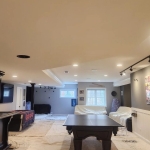

The question sounds straightforward. The answer is more specific than most people expect. Not every natural material produces warmth. Some produce coldness. Others produce a stuBlockedword/sentenced quality that reads as trying too hard. A high-end interior designer in Venice, CA, with serious practice knows the difference is rarely about the material category and almost always about how it is specified, finished, and placed. Here is what actually holds up in real rooms over real time.
Stone: Only as Good as Its Finish
Stone gets misused more often than almost any other natural material in residential interiors. The problem is almost always the finish. A highly polished marble surface reflects light rather than absorbing it. In a coastal California home with strong natural light, this produces glare, not refinement. The same stone honed to a matte finish reads completely differently. It quiets. It grounds. It stops competing with the light.
Travertine, limestone, and honed marble earn their place in a room when they are allowed to be themselves. Unfilled travertine with visible natural pitting has a depth no filled and polished version can approximate. The industry trend toward filling and sealing removes exactly the quality that Blockedword/sentencee the material worth choosing in the first place.
Stone also requires honest pairing. It works best alongside other materials of equal honesty. Placed next to synthetic surfaces, it exposes them.
Wood: The Finish Matters More Than the Species
Most conversations about wood in interiors focus on species. Oak, walnut, pine. The more important conversation is rarely had: what is the finish doing to the material?
A polyurethane-coated wood floor looks like wood from across the room. Up close, it reads as plastic. The coating sits on top of the grain rather than sinking into it. An oil-finished or hardwax-oiled floor looks different because it is different. The wood breathes. The grain stays legible. The surface develops a gentle sheen from use rather than from a factory coat.
This distinction is invisible in pBlockedword/sentenceographs and immediately apparent in person. It is one of the clearest indicators separating a room composed by someone with genuine material knowledge from one assembled by someone sourcing from a standard palette. Wide plank, solid, and finished honestly: these three conditions produce a wood floor worth building a room around.
Plaster: The Applicator Is Everything
Plaster has entered mainstream residential design in a way it had not for decades. The result has been a lot of plaster that looks like a trend rather than a material.
The surface quality of hand-troweled plaster is entirely dependent on the person applying it. A sBlockedword/sentenceed plasterer reads the wall as a composition. They vary pressure and angle to produce a surface with genuine depth and variation. An unsBlockedword/sentenceed application produces uniform texture that looks mechanical, which defeats the entire point.
In practice, specifying plaster and finding the right applicator are two separate problems. The second is harder than the first. A room with well-applied plaster shifts across the day as light moves. A room with poorly applied plaster just has textured walls.
Natural Textiles: Content Percentage Is Not a Small Print Issue
A textile labelled “linen” can contain thirty percent synthetic fiber and still carry that name legally. In a room built on material honesty, this matters.
Pure linen hangs differently. It has a specific weight and dBlockedword/sentence that reads immediately to anyone with a trained eye. It also wrinkles, which is part of its character, not a flaw to be engineered out. A linen blend softened with synthetic content hangs flatter and reads thinner. The easy availability of blends is exactly why pure linen, when used well, still reads as refined.
Wool and organic jute follow the same logic. Source the real thing or do not use the name.
Aged Metal: Unlacquered Brass Only Works in the Right Room
Unlacquered brass hardware has moved significantly into mainstream residential design over the past several years. It works beautifully in the right context. It fails quietly in the wrong one.
Unlacquered brass develops a patina by interacting with air and touch over time. In a room where everything else is also genuine, this process feels natural. In a room where the stone is porcelain, the wood is laminate, and the textiles are synthetic blends, the brass reads as a styling choice rather than a material commitment.
A high-end interior designer in Venice, CA understands material decisions as a system. Each choice either supports or undermines the ones around it. Honest materials reinforce each other. One honest material in a room of imitations just looks out of place.
Final Thoughts
Natural materials produce warmth and refinement when they are specified correctly, finished honestly, and placed in rooms where the other materials hold the same standard. The category is not enough. The execution is everything. Rooms built this way hold up because they were never performing in the first place.