
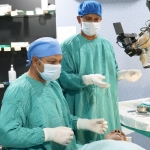

Do your eyes water constantly, even when you are not crying? Do you experience sticky discharge, repeated eye infections or tears overflowing onto your cheeks? These symptoms may be related to a blocked tear duct.
Tears normally drain from the eyes through tiny openings near the inner corners of the eyelids and pass into the nose. When this drainage pathway becomes blocked, tears can accumulate and cause discomfort or infection. Depending on the cause and severity, an ophthalmologist may recommend medication, a minor procedure or surgery.
If you are looking for tear duct surgery in Lucknow, Klarity Eye Care Hospital in Nirala Nagar provides evaluation and treatment for conditions affecting the tear drainage system.
What Is a Blocked Tear Duct?
A blocked tear duct, medically known as nasolacrimal duct obstruction, occurs when the normal pathway that drains tears from the eye into the nose becomes narrowed or blocked.
This can affect one or both eyes. The condition may develop because of age-related changes, infection, inflammation, injury, previous surgery or a congenital blockage present from birth.
When tears cannot drain properly, they collect on the eye surface and may overflow onto the cheeks. Some patients also experience repeated infections around the tear sac.
Common Symptoms of Tear Duct Blockage
The symptoms can vary depending on the location and severity of the obstruction. Common signs include:
-
Persistent watering or overflowing tears.
-
Sticky discharge around the eyelids.
-
Repeated eye infections or inflammation.
-
Redness and irritation near the inner corner of the eye.
-
Swelling or tenderness near the tear sac.
-
Blurred vision that temporarily clears after wiping away tears.
Persistent watering should not automatically be assumed to be a blocked tear duct. Dry eyes, allergies, eyelid problems and other eye conditions can also cause excessive tearing. An eye specialist can identify the underlying reason.
When Is Tear Duct Surgery Needed?
Surgery may be considered when a confirmed tear drainage blockage causes persistent symptoms, recurrent infections or other complications and is unlikely to improve with non-surgical management.
The appropriate treatment depends on the patient's age, the location of the blockage, its cause and the condition of the surrounding tissues.
For some patients, treatment may involve clearing the drainage pathway. Others may need a procedure that creates a new route for tears to drain into the nose.
Types of Tear Duct Procedures
1. Dacryocystorhinostomy (DCR)
Dacryocystorhinostomy, commonly called DCR, is a surgical procedure used to treat certain blockages of the nasolacrimal duct. It creates a new passage between the tear sac and the inside of the nose, allowing tears to drain.
DCR may be performed through an external approach or an endoscopic approach through the nose. The choice depends on the patient's condition and the surgeon's assessment.
2. Tear Duct Probing
Probing may be recommended in selected cases, particularly for congenital tear duct obstruction in children. A fine instrument is used to open the blocked drainage pathway.
3. Lacrimal Canalicular Repair
If the small drainage channels near the eyelids are damaged due to injury, specialised repair may be required. The procedure depends on the extent and location of the damage.
Not every patient needs surgery. The ophthalmologist will explain the suitable treatment after examining the tear drainage system.
How Is a Blocked Tear Duct Diagnosed?
Before recommending treatment, the ophthalmologist evaluates the symptoms and examines the eyes and surrounding structures. Investigations may include:
-
Clinical examination: Assessment of the eyelids, tear openings and tear sac.
-
Tear drainage assessment: Evaluation of how tears pass through the drainage pathway.
-
Lacrimal syringing or irrigation: A procedure that may help assess whether the drainage passage is open or blocked.
-
Additional investigations: Imaging or nasal examination may be advised in selected cases.
The tests recommended depend on the suspected location and cause of the blockage.
Tear Duct Surgery at Klarity Eye Care Hospital, Lucknow
Klarity Eye Care Hospital offers oculoplasty services for conditions involving the eyelids and tear drainage system. Its listed procedures include DCR through external and endoscopic approaches, management of congenital tear duct obstruction, and repair of lacrimal canalicular injuries.
Patients experiencing persistent watering, repeated discharge or suspected tear duct blockage can consult an ophthalmologist for an appropriate evaluation.
The treatment plan is based on individual clinical findings. Patients should contact the hospital to confirm the surgeon's availability, the specific procedure offered, appointment timings and current charges.
Recovery After Tear Duct Surgery
Recovery varies according to the procedure performed and the patient's overall condition. Some temporary swelling, watering or mild discomfort may occur after surgery.
Your surgeon may recommend prescribed medicines, eye or nasal care instructions and follow-up visits. It is important to:
-
Use prescribed medicines exactly as directed.
-
Avoid rubbing or pressing the operated area.
-
Follow instructions about nose blowing and other activities.
-
Attend scheduled follow-up appointments.
-
Contact the hospital if symptoms worsen or unexpected problems develop.
Seek prompt medical advice if you experience increasing pain, fever, significant swelling, heavy bleeding or worsening vision.
Book a Consultation for Tear Duct Treatment in Lucknow
Persistent watery eyes can interfere with reading, working and everyday activities. Early evaluation can help identify whether the problem is caused by a tear duct obstruction or another eye condition.
Klarity Eye Care Hospital is located at:
Address: B-39/1, Nirala Nagar, opposite Vivekanand Hospital, Lucknow, Uttar Pradesh 226020
Phone: +91 98398 72625
Consultation hours: Monday to Saturday, 10:00 AM–8:30 PM
Website: https://klarityeyecare.in/glaucoma-treatment-in-lucknow/
Contact the hospital to enquire about tear duct evaluation and surgical consultation.
Frequently Asked Questions
1. Is tear duct surgery painful?
The procedure is performed with appropriate anaesthesia. Some discomfort or temporary swelling may occur afterward, depending on the type of surgery.
2. How long does tear duct surgery take?
The duration depends on the procedure, the complexity of the blockage and the anaesthesia plan. Your surgeon can explain the expected duration before treatment.
3. Can a blocked tear duct clear without surgery?
Some blockages, particularly certain congenital cases in children, may improve without surgery. Persistent or complicated obstructions may require a procedure.
4. Is DCR surgery used for blocked tear ducts?
Yes. DCR is a commonly used surgical approach for selected blockages of the nasolacrimal duct. It creates an alternative drainage pathway for tears.
5. Where can I get tear duct surgery in Lucknow?
You can contact Klarity Eye Care Hospital in Nirala Nagar, Lucknow, to enquire about tear duct evaluation, DCR and other lacrimal procedures.
Medical Disclaimer
This article is for general educational purposes and does not replace professional medical advice, diagnosis or treatment. The need for surgery and the choice of procedure must be determined by a qualified ophthalmologist after an examination. Seek prompt medical attention for painful swelling near the inner corner of the eye, fever, spreading redness or changes in vision.