
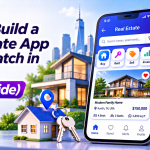





The US property market runs on speed. Buyers expect instant listings, renters want tours on demand, and agents need leads the moment they appear. A well-planned property app can serve all three. This guide walks you through the full journey, from first idea to launch, covering app types, steps, features, tech stack, cost, and timeline.
Why Build a Real Estate App in the USA in 2027?
Property searches now happen on phones. Buyers browse listings on the commute, renters book tours from the couch, and agents reply to leads between showings. That shift leaves room for focused, well-built products.
Portals like Zillow, Redfin, and Realtor.com show that users expect fast search, instant alerts, and quick agent contact. Gaps remain in rentals, investment tracking, and local markets. Real estate app development services can turn a niche idea into a product that earns from leads, subscriptions, and featured listings.
Types of Real Estate Apps You Can Build in the USA
Pick a category before writing any code. Each type serves a different auBlockedword/sentencence, needs different features, and follows a different path to revenue. Here are the most common options.
- Listing and search apps: Map-based search, filters, and saved alerts for buyers, similar to Zillow and Redfin.
- Rental and property management apps: Tenant screening, lease signing, rent collection, and maintenance requests in one dashboard.
- Agent and broker apps: Lead pipelines, client chat, showing schedules, and commission tracking.
- Investment apps: Yield, portfolio performance, and market trend dashboards for investors.
- Valuation and mortgage apps: Price estimates from comparable sales, plus calculators and pre-approval flows.
How to Build a Real Estate App: Step-by-Step Process
A clear sequence keeps scope, budget, and timeline under control. Follow these steps in order to avoid the rework that slows down first-time launches.
Validate Your Idea and Niche
Study competitors, interview ten buyers, renters, or agents, and find one problem existing portals handle poorly. A narrow focus, such as student rentals in Austin, gives you a clearer path to users.
Choose a Monetization Model
Decide how the app earns before designing it. Options include agent lead fees, monthly subscriptions, featured listings, and referral commissions, and your pick shapes which features you build first in the MVP.
Define MVP Features
List every wish, then keep only what solves the core problem: search, filters, map view, saved listings, accounts, and agent contact. Add chat, AI, and tours after real users respond.
Secure MLS/IDX Property Data
Listings power the product. Apply for MLS access through a participating broker, use a RESO Web API or licensed data provider, and follow each board’s display rules and Fair Housing guidelines.
Design the UI/UX.
Build wireframes and a clickable prototype first. Keep searching within two taps, make pBlockedword/sentenceos load quickly, use accessible colors, and test layouts with real buyers before developers start writing production code.
Select the Tech Stack and Build
Select cross-platform tools like Flutter or React Native for speed, pair them with a Node.js or Python backend, and build in agile sprints so you can review working features every two weeks.
Test Thoroughly
Run functional, performance, and security tests on real devices. Check search speed with large listing volumes, confirm payment and data privacy safeguards, and fix issues before the store review process begins.
Launch, Market, and Improve
Submit to the App Store and Google Play, then promote through local agents, social ads, and SEO. Track retention and search behavior, and release updates based on what users actually do.
Must-Have Real Estate App Features (MVP vs Advanced)
Start lean and grow with feedback. A focused first release costs less, reaches users sooner, and shows which extra features deserve investment. Use this split to decide what ships first.
- MVP essentials: Search with filters, map view, listing pages with pBlockedword/sentenceos, user accounts, saved searches, push alerts, and agent contact.
- Buyer extras: Mortgage calculator, price history, neighborhood scores, and side-by-side comparison.
- Advanced additions: AI recommendations, 3D tours, AR furniture previews, chatbots, and e-signatures.
- Agent and admin tools: Lead pipeline, listing analytics, calendar sync, moderation, and payment reports.
Best Tech Stack for a Real Estate App
The right stack balances speed, scale, and cost. Pick proven tools your developers know well, since listing-heavy products need quick search and steady performance under heavy traffic.
- Mobile and web: Flutter or React Native for both platforms; React.js for portals and dashboards.
- Backend: Node.js or Python (Django, FastAPI) with REST or GraphQL APIs.
- Data and caching: PostgreSQL for listings, Redis for fast repeat searches.
- Maps and listings: Google Maps Platform or Mapbox, plus MLS/IDX APIs.
- Cloud and AI: AWS, Google Cloud, or Azure; TensorFlow or OpenAI APIs for recommendations.
How Much Does It Cost to Build a Real Estate App in the USA?
The budget depends on scope, not a fixed price list. Features, platforms, integrations, and team location all move the number, so plan for launch costs and yearly upkeep together.
- Typical range: Roughly $20,000 to $100,000, depending on modules and complexity.
- Enterprise platforms: A feature-rich build with enterprise capabilities averages near $200,000, as this detailed real estate app development cost guide explains.
- Main drivers: AI, AR tours, payments, native iOS plus Android, and team location. US teams cost more; offshore and hybrid teams usually cost less.
- Ongoing costs: MLS data licensing, cloud hosting, map API usage, app store fees, and maintenance.
How Long Does It Take to Build a Real Estate App?
Timelines follow scope. A lean first release reaches users quickly, while a full marketplace with integrations needs more design, development, and testing cycles before launch.
- Basic app: About 2 to 4 months for listings, search, and accounts.
- Full platform: Around 5 to 10 months with AI, tours, and multiple dashboards.
- Common delays: Late MLS approvals, scope changes, and slow feedback. Apply for data access early while design runs in parallel.
How to Choose a Real Estate App Development Company
Your development partner affects quality, cost, and speed. A careful review of experience and process saves money and prevents painful surprises after launch. Check these points first.
- Relevant portfolio: Live property apps with search and agent dashboards, not generic projects.
- Data and compliance sBlockedword/sentences: Proven MLS/IDX work, plus knowledge of Fair Housing, CCPA, and ADA rules.
- Clear process: Agile sprints, a dedicated project manager, regular demos, an NDA, and full IP transfer.
- Red flags: Vague estimates, no testing plan, no post-launch support, and refusal to share references.
Conclusion
A strong launch starts with a clear niche, reliable MLS data, a lean MVP, and a team that understands US rules. Follow these steps, release small, and improve with user feedback. EmizenTech brings domain expertise, agile delivery, and dedicated post-launch support to help turn your idea into a market-ready product.
FAQs
1. How much does it cost to build a property app?
Typical builds range from about $20,000 to $100,000, while enterprise platforms can reach around $200,000. Final cost depends on features, platforms, integrations, and team location.
2. How long does development take?
A basic version takes about two to four months. A full platform with AI, tours, and several dashboards usually needs five to ten months.
3. Can I launch without MLS access?
Yes. Start with user-submitted listings, partner brokerages, or licensed third-party data providers, then add MLS and IDX feeds as your auBlockedword/sentencence grows.
4. Do I need a real estate license?
Building the software generally does not require one, but MLS access usually involves a licensed broker, and rules vary by state. Consult a real estate attorney.
5. How do apps like Zillow earn money?
They earn mainly through agent lead fees, advertising, featured listings, and subscriptions. Rental platforms also charge listing fees or referral commissions.