



To get this far, Morocco has invested heavily, especially in football infrastructure, including two of Africa's most advanced facilities - both of which bear King Mohammed's name.
Together, the Mohammed VI Football Academy and Mohammed VI Training Complex host youth and senior national teams - men and women - combining elite training with education, accommodation and sports science.
"This evolution of Moroccan football is not a random achievement," said Bounouar.
"It came through years of strategic planning and a long-term national project supported by the highest levels of Moroccan authorities."
King Mohammed first discussed his plan to use football as a tool for social and economic development in 2008, before opening the academy in 2009 and the $65m (£48.5m) training complex in 2019.
"The idea was to give young talents modern facilities, good coaches, good education and a healthy environment," Bounouar added.
This structure has helped to create a steady pipeline for both domestic clubs and the national team, alongside an increasing number of players competing at top European clubs.
Nigerian photojournalist Sulaiman Adebayo, who has visited Morocco many times, agrees that the country's rising football profile is no accident.
"Everything they've done for the past four to five years has been deliberate in terms of building facilities and improving their football," he said.
"They are strategic and intentional - and it shows."
While fans have enjoyed the improved performances of Morocco's national teams, recently the size of the investment has come under greater scrutiny.
This year's so-called Gen Z protests saw the country's younger generation call for "hospitals not stadiums", as Morocco continues to spend big on new facilities before co-hosting the 2030 World Cup alongside Spain and Portugal.
"There are differing opinions," Bounouar said.
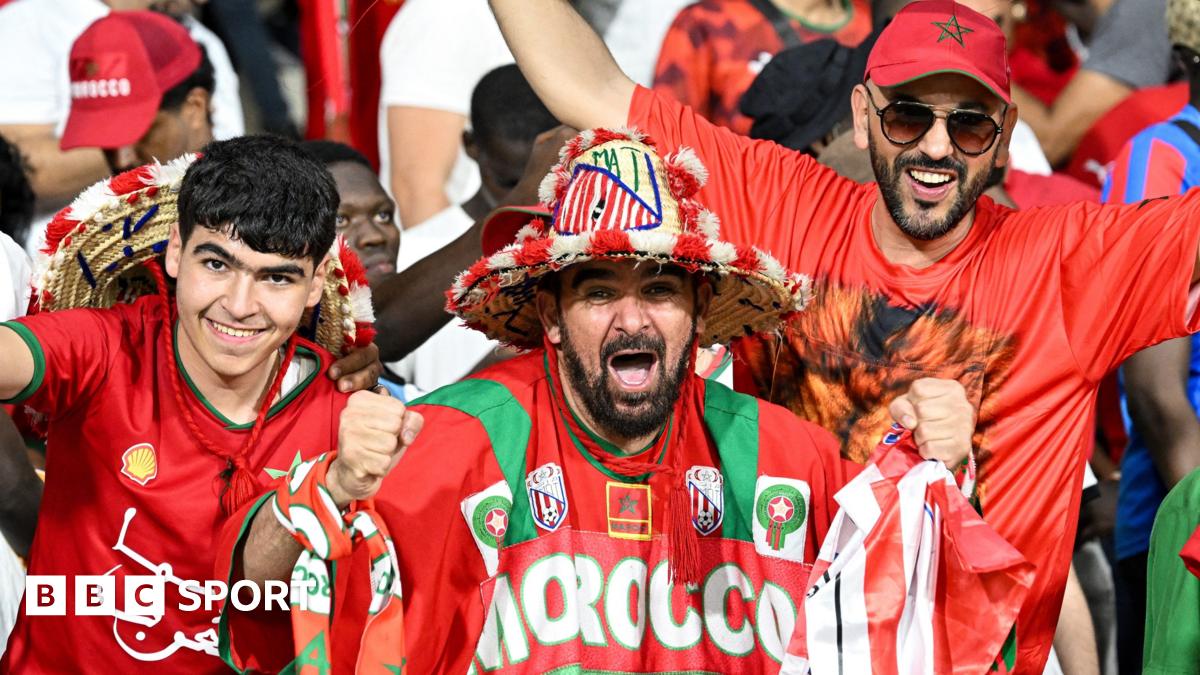
"The majority of Moroccans view football as an essential national project that provides benefits beyond the field.
"Most of them believe success in football is a great way to unite a diverse population and raise Morocco's profile globally, attracting attention like tourism."
According to statistics from Fifa and the Moroccan FA, participation at grassroots level has increased.
Bounouar believes the sport has become "even more embedded in daily life", with more children playing outside of school - something not limited to boys and men, with increased social acceptance of girls playing football having been an original part of King Mohammed's plan.
This has been helped by the Atlas Lionesses reaching successive Women's Cup of Nations finals on home soil, while captain Ghizlane Chebbak is the new African player of the year.